Sexual Abuse Counselling in Kalamassery: Trauma Support
Sexual Abuse Counselling in Kalamassery offers a safe and confidential space for people who have experienced sexual abuse, harassment, assault, coercion, or unwanted sexual experiences. Many survivors carry emotional pain silently because they feel confused, ashamed, scared, or unsure about where to begin. Counselling helps survivors understand that what happened was not their fault and that healing can happen step by step.
Sexual abuse can affect the mind, body, relationships, confidence, and daily life. Some people may remember the incident clearly, while others may feel disconnected, numb, or overwhelmed without fully understanding why. Professional counselling provides gentle emotional support, trauma-informed care, and practical coping strategies to rebuild safety, trust, and inner strength.
Table of Contents
- What Is Sexual Abuse Counselling?
- Why Sexual Abuse Counselling Matters
- Common Causes and Risk Factors
- Types of Sexual Abuse Experiences
- Emotional and Physical Symptoms
- Benefits of Professional Counselling
- Treatment Approaches Used in Counselling
- What Happens During a Counselling Session?
- Tips for Survivors and Families
- When to Seek Immediate Help
- Frequently Asked Questions
- Conclusion
What Is Sexual Abuse Counselling in Kalamassery?
Sexual Abuse Counselling in Kalamassery is a professional mental health support service for people who have experienced sexual abuse or related trauma. It is not about forcing someone to talk before they are ready. Instead, it gives survivors a safe, private, and non-judgmental environment where they can speak at their own pace.
A trained psychologist or counsellor helps the person understand the emotional impact of abuse. Counselling may focus on fear, guilt, shame, anxiety, anger, trust issues, flashbacks, nightmares, relationship problems, or low self-worth. The goal is to support healing, emotional stability, and healthy coping.
Sexual abuse counselling may help:
- Children and adolescents
- Adults
- Survivors of childhood sexual abuse
- Survivors of recent abuse or assault
- People affected by harassment or coercion
- Family members supporting a survivor
- Individuals struggling with trauma symptoms
Every survivor’s experience is different. So, the counselling plan should always be personalized.
Why Sexual Abuse Counselling Matters
Sexual abuse is not only a physical boundary violation. It can deeply affect emotional safety, self-image, relationships, sleep, confidence, and the ability to trust others. Some survivors may try to ignore the experience, but trauma can continue to appear through anxiety, fear, mood changes, or body-related discomfort.
Sexual Abuse Counselling in Kalamassery helps survivors process these effects in a structured and compassionate way. It supports emotional recovery without blame, pressure, or judgment.
Counselling matters because it helps survivors:
- Understand trauma responses
- Reduce self-blame
- Manage anxiety and panic
- Improve sleep and emotional regulation
- Rebuild boundaries
- Strengthen self-confidence
- Develop healthy coping skills
- Feel safer in daily life
- Improve relationships
- Move toward long-term healing
Healing does not mean forgetting what happened. It means reducing the control that trauma has over the present.
Types of Sexual Abuse Experiences
Sexual abuse can take many forms. A person does not need to experience physical injury for the incident to be serious. Any unwanted sexual behavior, pressure, or violation of consent can be harmful.
Childhood Sexual Abuse
This includes any sexual behavior involving a child. It may include inappropriate touching, exposure, grooming, sexual comments, or forced sexual acts.
Sexual Assault
Sexual assault includes unwanted sexual contact, touching, coercion, or forced sexual activity.
Relationship or Marital Sexual Abuse
Abuse can happen even within relationships or marriage. Consent is still necessary, and pressure or force is never acceptable.
Online Sexual Abuse
Digital abuse may include threats, sharing private images, coercive messages, cyber harassment, or online grooming.
Symptoms After Sexual Abuse
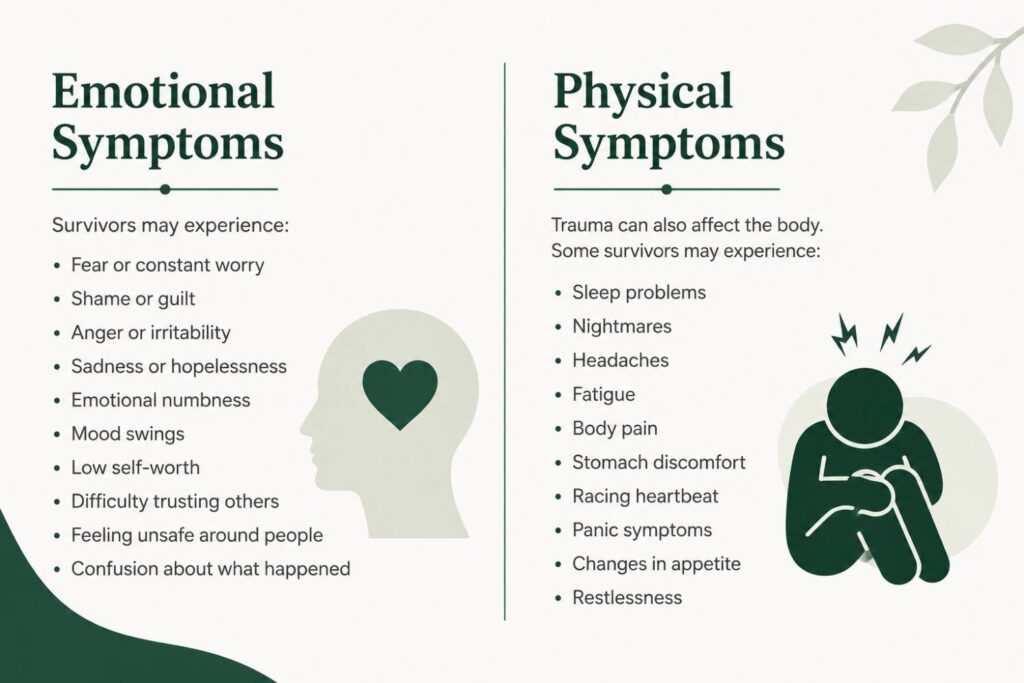
Emotional Symptoms
Survivors may experience:
- Fear or constant worry
- Shame or guilt
- Anger or irritability
- Sadness or hopelessness
- Emotional numbness
- Mood swings
- Low self-worth
- Difficulty trusting others
- Feeling unsafe around people
- Confusion about what happened
Physical Symptoms
Trauma can also affect the body. Some survivors may experience:
- Sleep problems
- Nightmares
- Headaches
- Fatigue
- Body pain
- Stomach discomfort
- Racing heartbeat
- Panic symptoms
- Changes in appetite
- Restlessness
Benefits of Sexual Abuse Counselling in Kalamassery
Professional counselling offers many emotional and practical benefits. The process is gradual, respectful, and centered around the survivor’s comfort.
- Safe Emotional Expression
Many survivors feel unable to speak openly because of fear or judgment. Counselling provides a confidential space to express thoughts and emotions safely.
- Reduced Self-Blame
Survivors often blame themselves, even when they did nothing wrong. Therapy helps challenge guilt and rebuild a healthier understanding of responsibility.
- Better Coping Skills
Counselling teaches grounding techniques, breathing exercises, emotional regulation tools, and ways to handle triggers.
- Improved Boundaries
Survivors learn how to identify unsafe situations, say no, set limits, and protect emotional space.
- Trauma Processing
Therapy helps survivors process painful memories without becoming overwhelmed.
- Improved Relationships
Sexual abuse can affect trust, intimacy, communication, and connection. Counselling supports healthier relationship patterns.
- Rebuilding Confidence
Over time, counselling helps survivors reconnect with their strengths, identity, and sense of control.
Treatment Approaches Used in Counselling
Sexual Abuse Counselling in Kalamassery may include different evidence-based therapy approaches depending on the survivor’s age, symptoms, and comfort level.
Trauma-Informed Counselling
Trauma-informed care focuses on safety, trust, choice, collaboration, and empowerment. The survivor is not pushed to talk before they are ready.
Cognitive Behavioral Therapy
CBT helps identify painful thoughts such as “It was my fault” or “I am not safe anywhere.” The therapist helps replace these thoughts with healthier and more balanced beliefs.
Mindfulness-Based Therapy
Mindfulness can help survivors manage anxiety, flashbacks, and emotional overwhelm by bringing attention back to the present moment.
Grounding Techniques
Grounding methods help the person reconnect with the present when trauma memories or panic symptoms feel intense.
What Happens During a Counselling Session?
The first counselling session is usually a gentle conversation. The psychologist may ask about current symptoms, emotional concerns, safety, support systems, and goals for therapy. Survivors are not required to share every detail immediately.
A session may include:
- Understanding emotional distress
- Discussing current challenges
- Learning coping techniques
- Identifying triggers
- Creating a safety plan if needed
- Building trust with the therapist
- Planning future sessions
Sexual Abuse Counselling in Kalamassery should always move at the survivor’s pace. The therapist’s role is to support, not control the healing process.
When to Seek Immediate Help
Seek urgent support if the survivor is in immediate danger, has thoughts of self-harm, has serious physical injuries, or is experiencing severe distress. In such cases, contact emergency services, a trusted local authority, or a nearby hospital.
Counselling is an important part of healing, but immediate safety always comes first.
Choosing the Right Counsellor
The right counsellor should offer a safe, respectful, and confidential space. Survivors should feel heard and not judged.
Look for:
- Licensed mental health qualification
- Experience with trauma care
- Confidential approach
- Non-judgmental communication
- Evidence-based therapy methods
- Comfort working with children, teens, or adults
- Clear explanation of therapy process
- Respect for consent and emotional pace
Sexual Abuse Counselling in Kalamassery should feel safe, supportive, and survivor-centered.
Conclusion
Sexual Abuse Counselling in Kalamassery can help survivors move from fear, shame, and confusion toward safety, understanding, and emotional healing. Sexual abuse can affect mental health, relationships, confidence, sleep, and daily life, but professional support can make recovery more manageable.
Through trauma-informed counselling, CBT, mindfulness techniques, emotional support, and family guidance, survivors can rebuild trust and regain a sense of control. Healing is not about rushing or forgetting. It is about being supported with dignity, care, and patience. For individuals and families seeking safe psychological support in Kalamassery, counselling can be an important step toward long-term recovery.
To better understand the importance of mental well-being and psychological care, you can explore resources from the World Health Organization’s mental health resource center.