7 Proven Ways: Online Counselling for Sexual Abuse Survivors
Online counselling for sexual abuse survivors provides confidential emotional support through secure video, audio, or text-based sessions. For survivors in Kalamassery and elsewhere, online therapy can make professional support easier to access without travelling to a clinic. It allows people to speak with a qualified mental health professional from a familiar and private environment.Sexual abuse can affect emotions, thoughts, relationships, sleep, confidence, physical comfort, and everyday functioning. Some survivors experience intense distress soon after the abuse, while others notice symptoms months or years later. There is no fixed timeline for trauma or recovery.Online counselling for sexual abuse survivors offers a flexible and survivor-centred way to begin healing. Sessions are conducted at the survivor’s pace, and they are not expected to discuss painful details before they feel ready. The early focus may simply be on emotional safety, trust, symptom management, and coping with daily life.
What Is Online Counselling for Sexual Abuse Survivors?
Online counselling for sexual abuse survivors is a form of professional psychological support delivered through digital communication. Depending on the service and the survivor’s preference, counselling may take place through:
- Secure video sessions
- Telephone calls
- Private audio sessions
- Encrypted text-based counselling
- Online therapy platforms
- A combination of digital and in-person sessions
The purpose of online therapy is not to make survivors forget what happened. Instead, it helps reduce the emotional control that trauma may have over their present lives.A trauma-informed counsellor understands that survivors may struggle with fear, shame, guilt, anger, numbness, confusion, distrust, panic, or unwanted memories. The counsellor creates a respectful environment where the survivor retains choice and control throughout the therapeutic process.Online counselling for sexual abuse survivors may be helpful for adults, adolescents, survivors of childhood sexual abuse, people who have experienced harassment or assault, and individuals dealing with online sexual exploitation or coercion.
Why Sexual Abuse Can Affect Survivors Differently
Online counselling for sexual abuse survivors recognises that two people can experience similar events and respond in completely different ways. Trauma is influenced by many factors, including age, personal circumstances, available support, the relationship with the person responsible, and whether the abuse happened once or repeatedly. The seriousness of a survivor’s emotional response cannot be measured only by the type of incident. Any unwanted sexual behaviour, pressure, manipulation, or violation of consent can have a lasting impact. Through online counselling for sexual abuse survivors, individuals can receive support that considers their personal experiences, emotional responses, and pace of recovery.
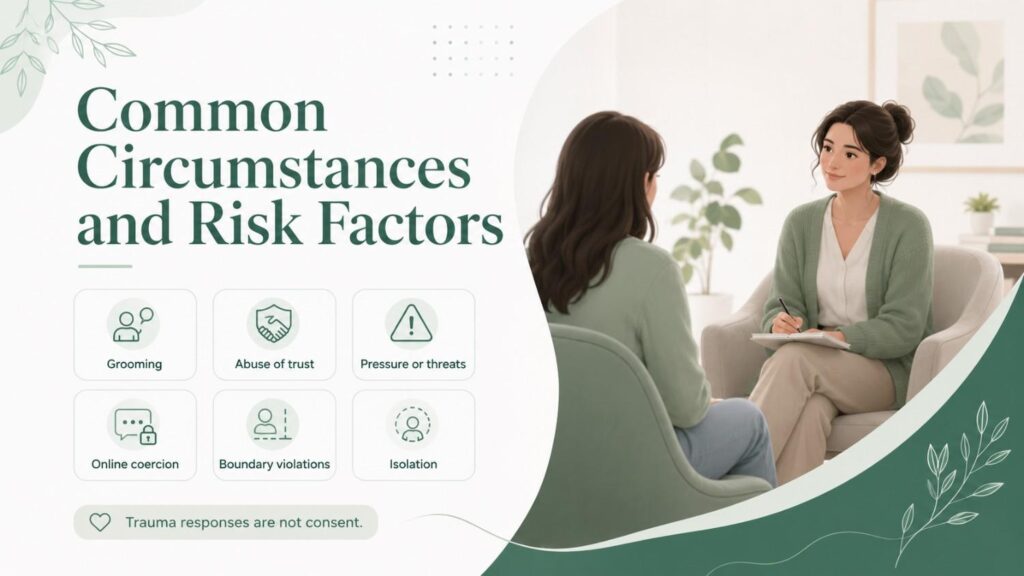
Common Circumstances and Risk Factors
Sexual abuse is never the survivor’s fault. However, understanding the circumstances in which abuse may occur can help people recognise unsafe behaviour and seek support.
Possible circumstances include:
- Grooming or manipulation
- Abuse of trust or authority
- Pressure within a relationship or marriage
- Childhood vulnerability
- Threats or intimidation
- Financial or emotional dependence
- Workplace or educational harassment
- Online grooming or coercion
- Sharing private images without consent
- Repeated boundary violations
- Substance-related vulnerability
- Isolation from supportive people
Online counselling for sexual abuse survivors helps individuals understand that freezing, complying, dissociating, or being unable to respond does not mean they agreed to what happened. These can be automatic survival responses.
Types of Sexual Abuse Experiences
Sexual abuse is not limited to one form of physical assault. It can include many unwanted, forced, manipulative, or non-consensual experiences.
Childhood Sexual Abuse
Childhood sexual abuse may include inappropriate touching, exposure, grooming, sexualised communication, exploitation, or forcing a child to take part in sexual behaviour.Adults who experienced abuse during childhood may seek therapy many years later. They may struggle with trust, self-esteem, emotional regulation, relationships, or memories that were previously difficult to understand.
Sexual Assault
Sexual assault includes any unwanted sexual contact or activity. It may involve force, threats, pressure, manipulation, intoxication, or an inability to give informed consent.
Relationship or Marital Sexual Abuse
Consent is required in every relationship, including marriage. Pressure, force, intimidation, threats, or ignoring a partner’s refusal can be abusive.
Sexual Harassment
Sexual harassment may include unwanted comments, messages, touching, requests, threats, or behaviour that creates fear or emotional discomfort.
Common Symptoms After Sexual Abuse
Trauma symptoms may appear immediately, gradually, or after a long period. Some people may not initially connect their emotional or physical difficulties with the abuse.
Emotional and Psychological Symptoms
Survivors may experience:
- Fear or constant worry
- Shame or guilt
- Anger or irritability
- Sadness or hopelessness
- Emotional numbness
- Mood changes
- Low self-esteem
- Difficulty trusting others
- Feeling unsafe in ordinary situations
- Panic attacks
- Intrusive thoughts
- Flashbacks
- Nightmares
- Difficulty concentrating
- Feeling disconnected from the body
- Confusion about the experience
- Avoiding people, places, or conversations
- Strong reactions to reminders or triggers
Physical and Behavioural Symptoms
Trauma may also affect the body and behaviour. Symptoms can include:
- Disturbed sleep
- Tiredness
- Headaches
- Muscle tension
- Stomach discomfort
- Changes in appetite
- Racing heartbeat
- Restlessness
- Difficulty relaxing
- Social withdrawal
- Reduced interest in usual activities
- Difficulty attending work or school
- Avoidance of medical examinations
- Increased use of alcohol or other substances
Not every survivor develops the same symptoms. Having only a few symptoms does not make the experience less important.
7 Benefits of Online Counselling for Sexual Abuse Survivors
Online counselling for sexual abuse survivors can provide meaningful support when it is delivered by a qualified, trauma-informed professional.
- Accessing Therapy From a Familiar Place
- Greater Privacy and Convenience.
- More Choice and Personal Control
- Early Support for Trauma Symptoms
- Continuity During Travel or Life Changes
- Access to Trauma-Informed Professionals
- Support at a Survivor-Led Pace
Tips for Survivors Using Online Therapy
Online counselling for sexual abuse survivors can become more effective when survivors feel informed and involved.
- Choose a licensed or properly qualified mental health professional.
- Ask whether the therapist has experience with sexual trauma.
- Discuss privacy and data security before beginning.
- Use a secure internet connection when possible.
- Avoid joining sessions from public spaces.
- Tell the counsellor when an exercise feels uncomfortable.
- Take breaks when emotions become intense.
- Keep emergency contact details available.
- Practise coping exercises between sessions.
- Avoid comparing your recovery with someone else’s.
- Give yourself time to decide whether the therapist feels suitable.
- Remember that changing therapists is acceptable when the relationship does not feel safe or respectful.
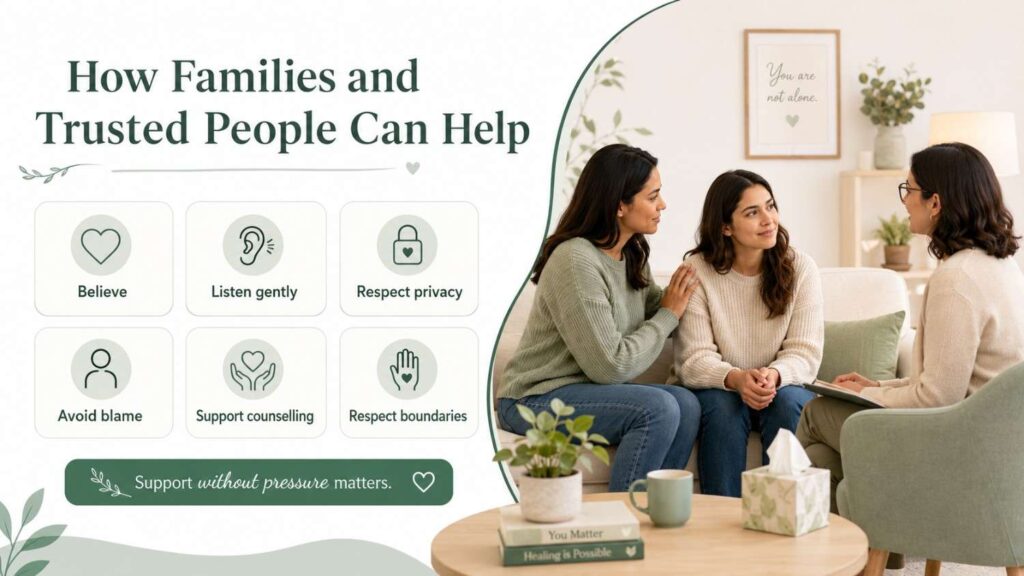
How Families and Trusted People Can Help
Supportive family members and friends can play an important role, but they should avoid taking control away from the survivor.
Helpful responses include:
- Believing the survivor
- Listening without demanding details
- Avoiding blame
- Respecting privacy
- Asking what kind of help is wanted
- Supporting access to counselling
- Respecting decisions and boundaries
- Learning about trauma responses
- Avoiding pressure to report or confront someone
- Helping with practical needs
Statements such as “Why did you not leave?” or “Why did you wait to tell someone?” may increase shame. Trauma can affect memory, speech, movement, and decision-making. The survivor may have frozen, dissociated, complied for safety, or feared the consequences of speaking.
Conclusion
Online counselling for sexual abuse survivors offers a confidential and accessible way to receive trauma-informed emotional support. It can help survivors understand their reactions, manage triggers, reduce guilt, improve boundaries, and regain a sense of control.Recovery does not require survivors to forget what happened or discuss everything immediately. Healing can begin through small, manageable steps guided by safety, consent, respect, and personal choice. For survivors seeking professional psychological support in Kalamassery, Online Counselling for Sexual Abuse Survivors may provide a practical, confidential starting point for rebuilding emotional well-being and moving forward at an individual pace.To better understand the importance of mental well-being and psychological care, you can explore resources from the World Health Organization’s mental health resource center.