When to Seek Counselling After Sexual Abuse: 5 Key Signs
Knowing when to seek counselling after sexual abuse can feel confusing, especially when emotions are heavy, memories feel painful, or the survivor is unsure whether their reaction is “normal.” Sexual abuse can affect emotional safety, self-worth, relationships, sleep, body comfort, and daily life. Some people feel distress immediately, while others notice symptoms months or years later.
Counselling can help survivors understand trauma responses, reduce self-blame, manage triggers, and rebuild a sense of safety. It is not necessary to wait until things become severe. Support can begin whenever a person feels ready, overwhelmed, unsafe, or unable to cope alone.
What Does Counselling After Sexual Abuse Mean?
Counselling after sexual abuse is professional emotional and psychological support for people who have experienced sexual assault, harassment, coercion, grooming, unwanted sexual contact, or any violation of consent and personal boundaries.
A counsellor or clinical psychologist provides a safe, private, and non-judgmental space where the survivor can speak at their own pace. Counselling does not force anyone to describe everything in detail. Instead, it helps the survivor understand what they are feeling, manage trauma symptoms, and slowly regain emotional control.
Understanding when to seek counselling after sexual abuse is important because trauma can affect people in many different ways. Some survivors may cry often. Some may feel numb. Some may avoid people. Some may continue daily life but feel broken inside. All of these reactions deserve care.
Why Survivors May Delay Seeking Help
Many survivors delay counselling because they feel confused, ashamed, scared, or unsure whether their experience “counts” as abuse. Some may worry that they will not be believed. Others may fear judgment from family, friends, or society.
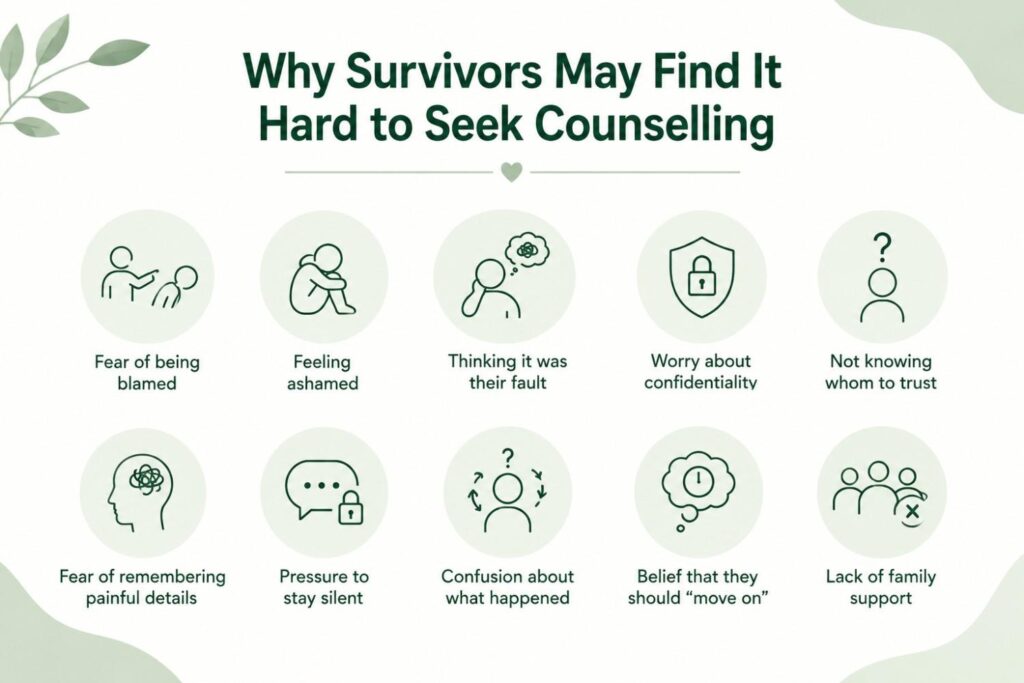
Common reasons survivors delay support include:
- Fear of being blamed
- Feeling ashamed
- Thinking it was their fault
- Worry about confidentiality
- Not knowing whom to trust
- Fear of remembering painful details
- Pressure to stay silent
- Confusion about what happened
- Belief that they should “move on”
- Lack of family support
These feelings are common after trauma, but survivors do not have to carry them alone. The right professional support can help them feel heard, believed, and emotionally safer.
When to Seek Counselling After Sexual Abuse
A survivor can seek counselling at any time after sexual abuse. There is no “correct” time. Some people need support immediately. Others reach out years later when old pain begins affecting current life.
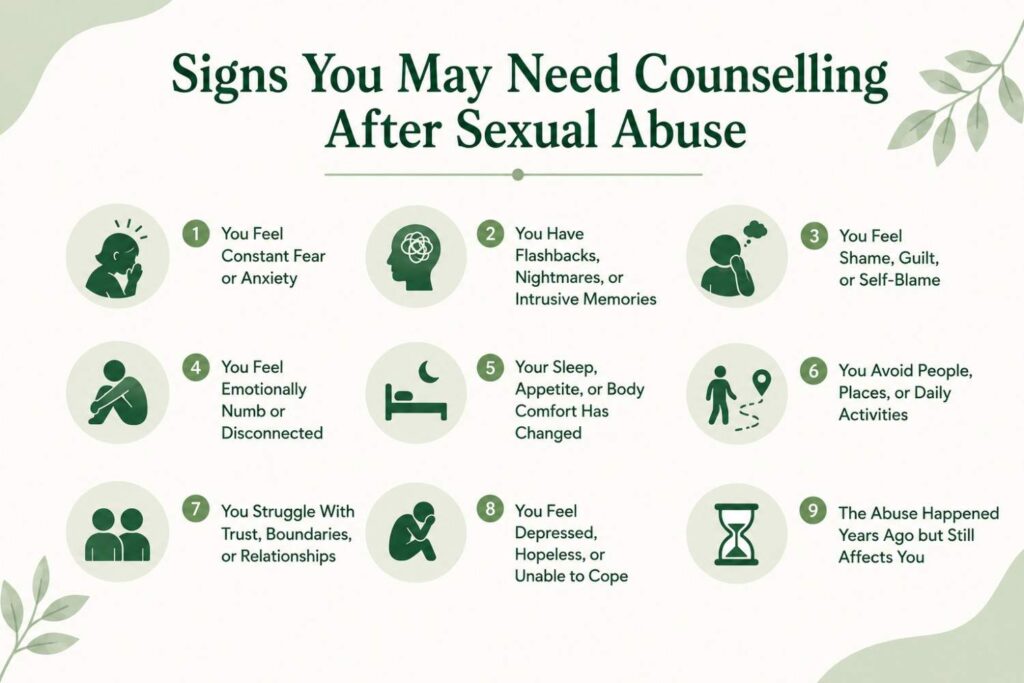
You may consider counselling if you experience any of the following signs.
1. You Feel Constant Fear or Anxiety
Fear and anxiety are common after sexual abuse. A survivor may feel unsafe even when there is no immediate danger. The body may stay alert because the nervous system is still trying to protect the person.
Signs may include:
- Constant worry
- Panic attacks
- Restlessness
- Racing thoughts
- Fear of being alone
- Fear of certain people
- Avoiding specific places
- Feeling unsafe in normal situations
- Sudden fear without clear reason
The World Health Organization explains that trauma-related symptoms can include re-experiencing, avoidance, and a heightened sense of threat after traumatic events. Counselling can help survivors understand these reactions and learn grounding tools to calm the body and mind
2. You Have Flashbacks, Nightmares, or Intrusive Memories
Flashbacks and nightmares can make a survivor feel as if the painful experience is happening again. Intrusive memories may appear suddenly during the day, during sleep, or after a trigger.
These may include:
- Repeated unwanted memories
- Nightmares
- Feeling trapped in the past
- Strong fear during reminders
- Body memories
- Panic after certain sounds, smells, or touch
- Avoiding sleep because of nightmares
These symptoms can feel frightening, but they are known trauma responses. Counselling can help survivors manage triggers and reduce the emotional intensity of memories.
3. You Feel Shame, Guilt, or Self-Blame
One of the strongest signs that counselling may help is ongoing self-blame. Many survivors ask themselves, “Why didn’t I stop it?” or “Why didn’t I tell someone earlier?” These thoughts can be painful and unfair.
Counselling helps survivors understand that freezing, silence, confusion, delayed disclosure, or fear are common trauma responses. They do not mean consent. They do not make the survivor responsible.
You may need support if you often think:
- “It was my fault.”
- “I should have known.”
- “I should have fought back.”
- “No one will believe me.”
- “I feel dirty or damaged.”
- “I should have moved on by now.”
A therapist can gently help challenge these beliefs and rebuild self-compassion.
4. You Feel Emotionally Numb or Disconnected
Some survivors do not cry or openly express pain. Instead, they may feel empty, distant, or disconnected from themselves and others. This can happen when the mind tries to protect the person from overwhelming emotions.
Signs of emotional numbness include:
- Feeling blank or empty
- Difficulty crying
- Feeling disconnected from your body
- Feeling like life is unreal
- Losing interest in things
- Not feeling close to people
- Avoiding emotions
- Feeling like you are only “functioning”
Emotional numbness is not a lack of pain. It can be a sign that the pain is too heavy to process alone. Counselling can help survivors reconnect with emotions safely and gradually.
5. Your Sleep, Appetite, or Body Comfort Has Changed
Trauma can affect the body. Even when a person does not want to think about the abuse, the body may show stress through sleep problems, appetite changes, pain, or tension.
Physical and sleep-related signs include:
- Difficulty sleeping
- Waking up often
- Nightmares
- Feeling tired all day
- Headaches
- Stomach discomfort
- Muscle tension
- Fast heartbeat
- Changes in appetite
- Feeling restless
- Avoiding touch
- Body-related discomfort
NHS guidance notes that people affected by rape, sexual assault, or abuse may need medical, practical, and emotional support. If physical symptoms, injuries, pregnancy concerns, or infection concerns are present after recent abuse, medical care is also important.
When Children or Teenagers Need Counselling
Children and teenagers may not always explain abuse clearly. They may show distress through behavior, fear, sleep changes, school problems, or sudden emotional reactions.
A child may need counselling if they show:
- Sudden fear of a person or place
- Nightmares
- Bedwetting after toilet training
- Clinginess
- Withdrawal
- Anger or tantrums
- School refusal
- Loss of interest in play
- Age-inappropriate sexual behavior
- Fear of changing clothes
- Crying without clear reason
A teenager may need counselling if they show:
- Mood swings
- Anxiety
- Depression
- Academic decline
- Withdrawal from friends
- Risk-taking behavior
- Low self-esteem
- Sleep problems
- Anger
- Fear of relationships
- Body image concerns
Parents and caregivers should listen calmly, believe the child or teen, avoid blaming questions, and seek professional support.
When Immediate Help Is Needed
Counselling is important, but immediate safety comes first. Seek urgent help if:
- The survivor is in immediate danger
- The abuse happened recently and medical care may be needed
- There are serious physical injuries
- The survivor feels unsafe at home
- The survivor has thoughts of self-harm
- The survivor is a child or vulnerable person
- The alleged abuser still has access to the survivor
- There is threat, blackmail, or ongoing harassment
In these situations, contact emergency services, a trusted adult, a nearby hospital, legal authorities where appropriate, or a local support helpline.
How Counselling Supports Recovery
Counselling can help survivors feel less alone and more in control. It supports emotional healing by providing a safe space to understand trauma and learn coping tools.
Counselling may help with:
- Reducing fear and anxiety
- Managing flashbacks
- Improving sleep
- Reducing shame and guilt
- Understanding triggers
- Building healthy boundaries
- Improving relationships
- Rebuilding self-worth
- Supporting children and families
- Developing safety plans
- Restoring confidence
The American Psychological Association notes that recommended treatments for PTSD include several forms of cognitive behavioral therapy. Depending on the survivor’s needs, therapy may include trauma-informed counselling, CBT, mindfulness-based therapy, grounding techniques, emotional regulation tools, and supportive psychotherapy.
What Happens in the First Counselling Session?
The first counselling session is usually a gentle conversation. The therapist may ask about current concerns, symptoms, safety, support system, and goals. The survivor does not have to share every detail of the abuse.
A first session may include:
- Understanding current emotional distress
- Discussing safety
- Learning about symptoms
- Identifying immediate needs
- Explaining confidentiality
- Planning coping strategies
- Deciding next steps
A good counsellor respects the survivor’s pace. The survivor can pause, ask questions, or choose what they are ready to share.
Conclusion
Understanding when to seek counselling after sexual abuse can help survivors and families take the first step toward safety and healing. Counselling may be helpful when fear, shame, guilt, flashbacks, nightmares, sleep problems, relationship issues, emotional numbness, or daily struggles begin affecting life.
There is no perfect time to begin. Support can start immediately after abuse, months later, or even years later. What matters is that the survivor feels respected, believed, and supported. With trauma-informed counselling, healthy coping tools, and a safe environment, healing can happen step by step.
To better understand the importance of mental well-being and psychological care, you can explore resources from the World Health Organization’s mental health resource center.