How Therapy Helps Survivors of Sexual Abuse Heal
Understanding how therapy helps survivors of sexual abuse is important for anyone who is trying to heal from trauma or support someone who has experienced abuse. Sexual abuse can affect emotions, thoughts, body comfort, sleep, relationships, self-worth, and the ability to feel safe. Many survivors carry fear, shame, guilt, confusion, or silence for a long time.
Therapy gives survivors a safe and confidential space to understand what happened, process painful emotions, and slowly rebuild control over life. It does not force a person to speak before they are ready. Instead, therapy supports healing at the survivor’s pace with care, respect, and professional guidance.
What Does Therapy Mean for Sexual Abuse Survivors?
Therapy for sexual abuse survivors is professional emotional support provided by a trained mental health professional, such as a clinical psychologist, counsellor, or trauma therapist. It helps survivors understand the emotional and psychological effects of abuse in a safe, private, and non-judgmental setting.
When people ask how therapy helps survivors of sexual abuse, the answer begins with safety. A good therapist helps the survivor feel heard, believed, and respected. Therapy is not about blaming, questioning, or pushing the person to remember every detail. It is about helping the survivor regain emotional stability and personal strength.
Therapy may support survivors who experience:
- Fear or anxiety
- Flashbacks
- Nightmares
- Shame or guilt
- Depression
- Emotional numbness
- Anger
- Trust issues
- Relationship struggles
- Difficulty setting boundaries
- Low self-worth
- Fear of touch or closeness
Every survivor’s healing journey is different. Therapy should always be personalized.
Why Survivors May Need Therapy
Sexual abuse is a deeply personal violation. It can affect the way a person sees themselves, others, and the world around them. Some survivors may feel unsafe even when the abuse has ended. Others may struggle with memories, body discomfort, emotional confusion, or fear of being judged.
Therapy can help because trauma often stays in the mind and body. A survivor may know logically that they are safe now, but their nervous system may still react as if danger is near. This can create panic, overthinking, sleep problems, avoidance, or emotional shutdown.
The main reason therapy matters is that survivors do not have to manage these feelings alone. Professional support can help them understand trauma responses and build healthier coping skills.
How Therapy Helps Survivors of Sexual Abuse Feel Safe
One of the most important ways therapy helps is by creating emotional safety. Many survivors feel unsafe after abuse, especially if they were not believed, were blamed, or had to remain silent.
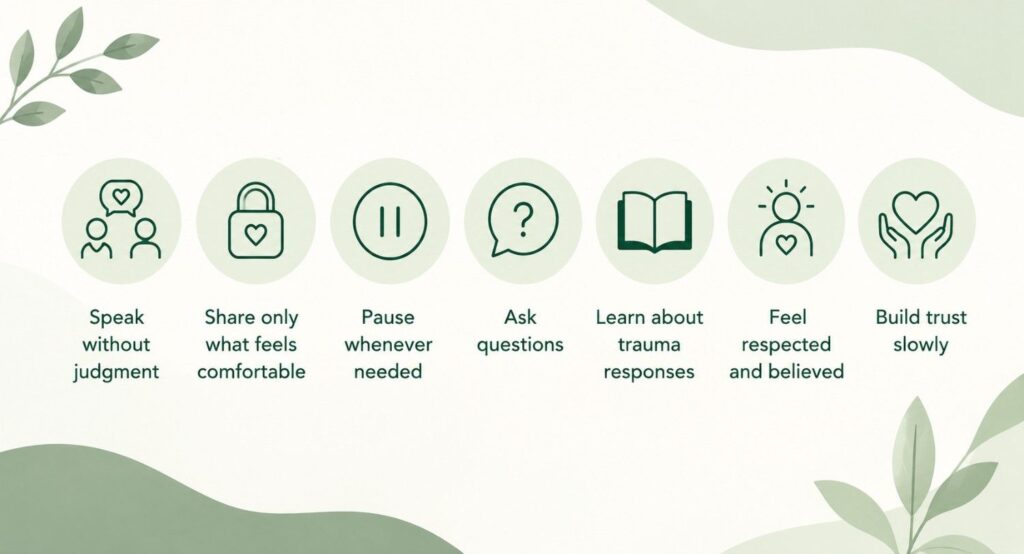
A therapist works to create a space where the survivor can:
- Speak without judgment
- Share only what feels comfortable
- Pause whenever needed
- Ask questions
- Learn about trauma responses
- Feel respected and believed
- Build trust slowly
Safety is not only physical. It is also emotional. Survivors may need time to feel safe in their body, relationships, home, workplace, school, or daily life. Therapy helps them recognize what safety means and how to rebuild it step by step.
Reducing Shame, Guilt, and Self-Blame
Shame and self-blame are common after sexual abuse. Many survivors think, “Why did this happen to me?” or “Could I have stopped it?” Some may feel guilty for freezing, staying silent, not telling earlier, or having confusing emotional reactions.
Therapy helps survivors understand that these responses are common trauma reactions. Freezing, silence, confusion, or delayed disclosure do not mean consent. They do not make the survivor responsible.
A therapist may gently help the survivor challenge painful thoughts such as:
- “It was my fault.”
- “I should have stopped it.”
- “No one will believe me.”
- “I am damaged.”
- “I cannot trust anyone again.”
Replacing these thoughts takes time, but it is a powerful part of healing. Understanding how therapy helps survivors of sexual abuse also means understanding how therapy helps remove the heavy burden of blame.
Managing Trauma Symptoms
Trauma can affect daily life in many ways. Some survivors may experience strong symptoms soon after abuse. Others may notice symptoms months or years later.
Therapy can help manage trauma symptoms such as:
- Flashbacks
- Nightmares
- Panic attacks
- Fear
- Sleep problems
- Avoidance
- Emotional numbness
- Anger
- Overthinking
- Body tension
- Difficulty concentrating
- Feeling constantly alert
Therapists may teach grounding techniques, breathing exercises, mindfulness skills, and emotional regulation methods. These tools help survivors calm the body and return to the present moment when memories or triggers feel overwhelming.
Understanding Triggers
A trigger is anything that reminds the survivor of the abuse or the feeling of danger. Triggers may be obvious or subtle.
Common triggers include:
- Certain people
- Specific places
- Sounds
- Smells
- Touch
- Darkness
- Arguments
- Medical checkups
- News or social media content
- Certain dates
- Relationship situations
Therapy helps survivors identify triggers and plan healthy responses. Instead of feeling helpless when triggered, the survivor learns ways to feel more grounded and in control.
Rebuilding Trust and Relationships
Sexual abuse can make it difficult to trust others. Survivors may pull away from family, friends, or partners. They may fear closeness, avoid touch, or feel unsafe in relationships.
Therapy helps survivors rebuild trust slowly. This does not mean trusting everyone immediately. It means learning how to recognize safe people, set boundaries, communicate needs, and protect emotional space.
Therapy may help survivors:
- Understand relationship fears
- Build healthy boundaries
- Communicate more clearly
- Recognize unsafe patterns
- Rebuild emotional connection
- Reduce fear of closeness
- Improve self-respect
- Feel more confident saying no
Healthy trust grows through time, safety, and consistency.
Rebuilding Self-Worth and Confidence
Sexual abuse can deeply affect self-worth. Survivors may feel broken, weak, ashamed, or unworthy of love and respect. These beliefs are painful, but they can change with support.
Therapy helps survivors reconnect with their strengths. It reminds them that they are more than what happened to them. A therapist may help the survivor identify personal values, strengths, choices, goals, and healthy ways to care for themselves.
This process can improve:
- Confidence
- Self-respect
- Body comfort
- Decision-making
- Personal boundaries
- Emotional strength
- Hope for the future
Healing is not about becoming the old version of oneself. Sometimes it is about building a safer, stronger, more supported version of life.
Therapy for Children and Teenagers
Children and teenagers need special care after sexual abuse. They may not have the language to explain what happened or how they feel. Their trauma may appear through behavior, mood, sleep, school performance, or fear.
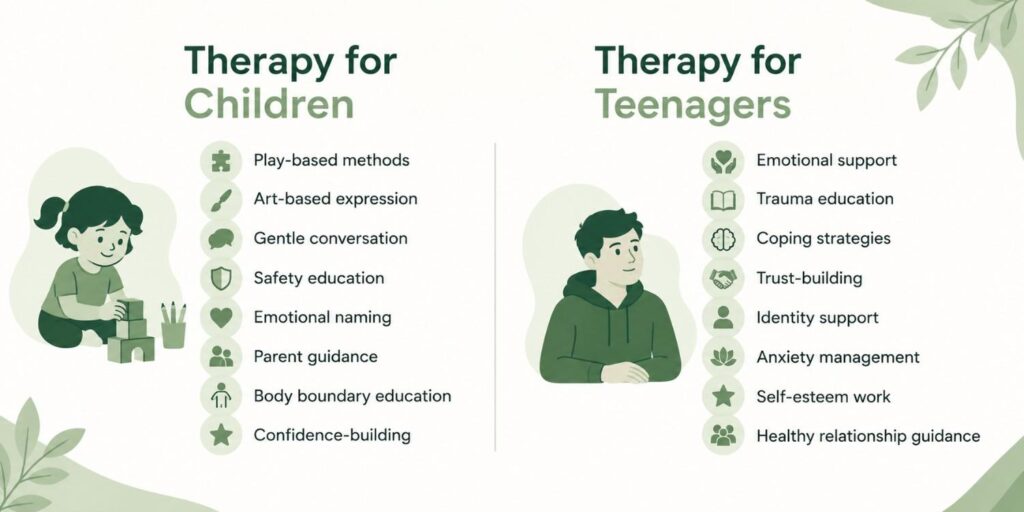
Therapy for children may include:
- Play-based methods
- Art-based expression
- Gentle conversation
- Safety education
- Emotional naming
- Parent guidance
- Body boundary education
- Confidence-building
Therapy for teenagers may include:
- Emotional support
- Trauma education
- Coping strategies
- Trust-building
- Identity support
- Anxiety management
- Self-esteem work
- Healthy relationship guidance
What Happens in a Therapy Session?
Many survivors feel nervous before starting therapy. They may worry that they will be forced to share painful details. A good therapist will not pressure the survivor. The first session is usually a calm conversation about current concerns, emotional symptoms, safety, and therapy goals.
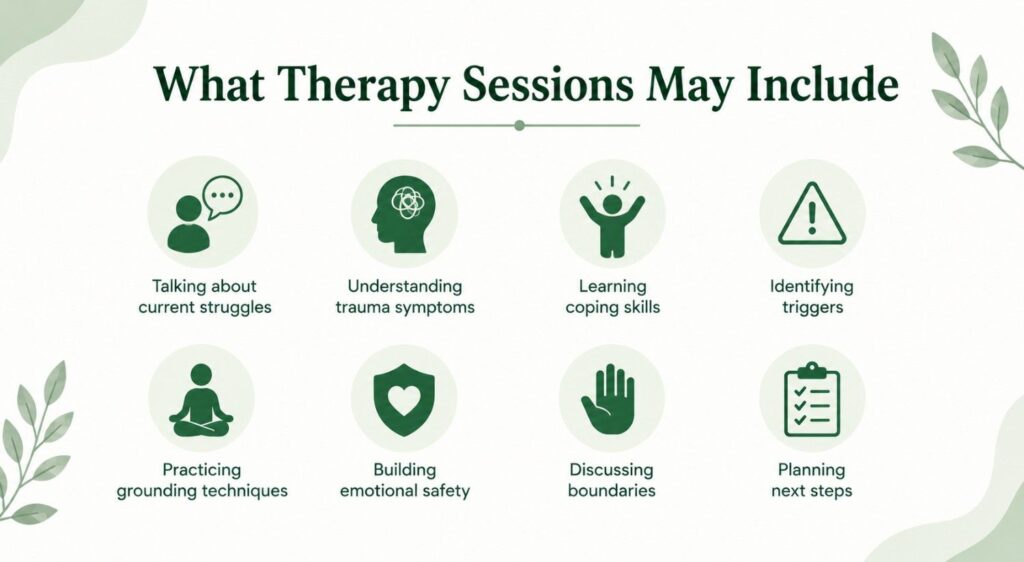
A therapy session may include:
- Talking about current struggles
- Understanding trauma symptoms
- Learning coping skills
- Identifying triggers
- Practicing grounding techniques
- Building emotional safety
- Discussing boundaries
- Planning next steps
The survivor can ask questions, pause, or choose what they are ready to discuss. Therapy should feel respectful and collaborative.
What Happens in a Therapy Session?
Many survivors feel nervous before starting therapy. They may worry that they will be forced to share painful details. A good therapist will not pressure the survivor. The first session is usually a calm conversation about current concerns, emotional symptoms, safety, and therapy goals.
A therapy session may include:
- Talking about current struggles
- Understanding trauma symptoms
- Learning coping skills
- Identifying triggers
- Practicing grounding techniques
- Building emotional safety
- Discussing boundaries
- Planning next steps
The survivor can ask questions, pause, or choose what they are ready to discuss. Therapy should feel respectful and collaborative.
When to Seek Immediate Help
Immediate help is needed if the survivor is in danger, has serious physical injuries, feels unsafe, or has thoughts of self-harm. In these situations, contact emergency services, a trusted person, a nearby hospital, or a qualified mental health professional.
Therapy is helpful for emotional recovery, but immediate safety should always come first.
Conclusion
Understanding how therapy helps survivors of sexual abuse can make it easier to take the first step toward healing. Therapy provides a safe, confidential, and supportive space where survivors can process trauma, reduce shame, manage triggers, rebuild trust, and strengthen self-worth.
No survivor should feel forced to heal quickly or speak before they are ready. With trauma-informed care, emotional support, and practical coping tools, recovery can happen step by step. Therapy helps survivors move from fear and silence toward safety, strength, and hope.
To better understand the importance of mental well-being and psychological care, you can explore resources from the World Health Organization’s mental health resource center.