Psychological Effects of Sexual Abuse: A Support Guide
The psychological effects of sexual abuse can be deep, painful, and long-lasting. Sexual abuse is not only a physical violation; it can affect the way a person thinks, feels, trusts, relates to others, and views themselves. Some survivors may feel fear, shame, anxiety, sadness, anger, or emotional numbness. Others may struggle silently without understanding why daily life feels difficult.
Every survivor responds differently. Some effects may appear soon after the abuse, while others may develop months or years later. Understanding the psychological effects of sexual abuse can help survivors, families, parents, caregivers, and partners recognize the need for gentle support and professional counselling.
What Are the Psychological Effects of Sexual Abuse?
The psychological effects of sexual abuse are the emotional and mental health difficulties that may happen after a person experiences unwanted sexual contact, coercion, harassment, assault, grooming, or any sexual boundary violation.
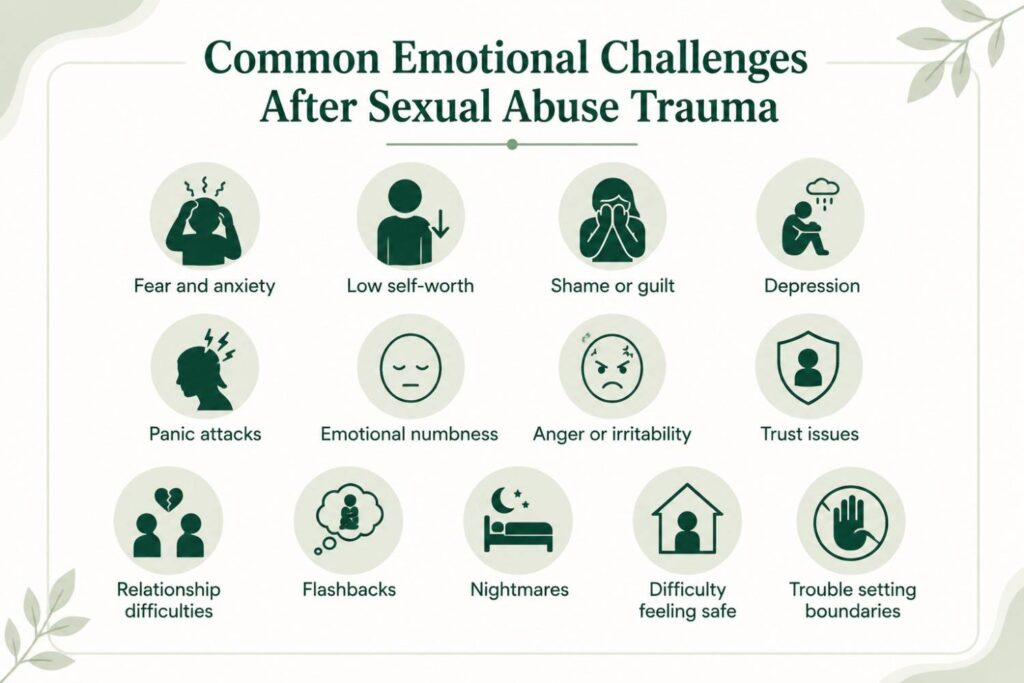
These effects may include:
- Fear and anxiety
- Low self-worth
- Shame or guilt
- Depression
- Panic attacks
- Emotional numbness
- Anger or irritability
- Trust issues
- Relationship difficulties
- Flashbacks
- Nightmares
- Difficulty feeling safe
- Trouble setting boundaries
It is important to understand that these reactions are not signs of weakness. They are common trauma responses. The mind and body may continue to react as if danger is still present, even after the abuse has ended.
Why Sexual Abuse Affects Mental Health
Sexual abuse affects mental health because it violates personal safety, trust, consent, and emotional boundaries. When someone experiences abuse, the brain may enter survival mode. This can create strong fear responses, emotional confusion, and difficulty feeling calm.
The survivor may ask questions like:
- “Why did this happen to me?”
- “Was it my fault?”
- “Will anyone believe me?”
- “Can I ever feel normal again?”
- “Why do I feel scared even now?”
These thoughts can become emotionally heavy. Over time, they may affect sleep, concentration, relationships, self-confidence, and daily functioning.
The psychological effects of sexual abuse may become stronger when the survivor does not receive support, is blamed, is silenced, or feels unsafe sharing the experience.
Common Emotional Effects of Sexual Abuse
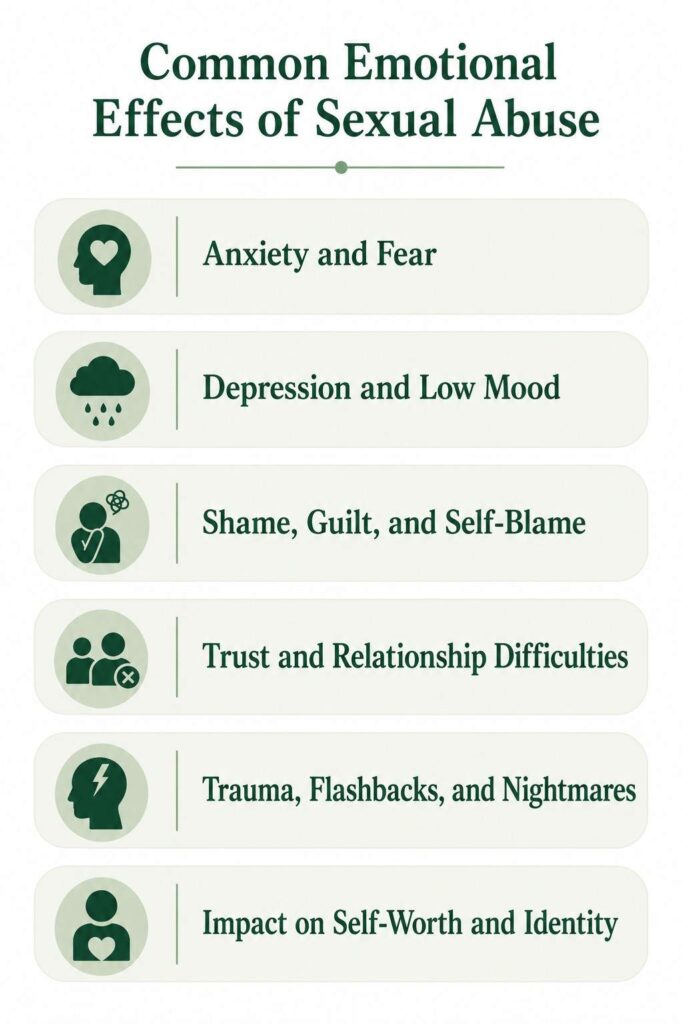
Emotional pain is one of the most common effects after sexual abuse. Survivors may experience emotions that feel confusing, intense, or difficult to control.
Fear
A survivor may feel unsafe around certain people, places, sounds, smells, or situations. Even small reminders can create fear.
Shame
Many survivors feel ashamed, even though the abuse was not their fault. Shame can make a person stay silent and avoid support.
Guilt
Some survivors think they should have stopped the abuse or spoken earlier. These thoughts are common, but they are not true. Responsibility belongs only to the person who caused harm.
Anger
Anger may be directed toward the abuser, family members, society, or even oneself. This anger is often connected to pain and helplessness.
Anxiety and Fear After Sexual Abuse
Anxiety is one of the major psychological effects of sexual abuse. The survivor may feel constantly alert, nervous, or unsafe. This can happen even when there is no immediate danger.
Common anxiety symptoms include:
- Overthinking
- Restlessness
- Racing thoughts
- Panic attacks
- Fast heartbeat
- Sweating
- Sleep problems
- Difficulty concentrating
- Fear of being alone
- Avoidance of certain places or people
Some survivors may always check doors, avoid crowds, feel uncomfortable with touch, or become frightened by sudden sounds. This happens because the nervous system is still trying to protect the person.
Counselling can help survivors understand anxiety triggers and learn calming techniques.
Depression and Low Mood
Depression can also develop after sexual abuse. The survivor may feel hopeless, tired, disconnected, or uninterested in daily life.
Signs may include:
- Persistent sadness
- Loss of interest in activities
- Low motivation
- Crying often
- Feeling worthless
- Social withdrawal
- Changes in sleep
- Changes in appetite
- Difficulty focusing
- Feeling emotionally heavy
Depression after abuse is not laziness or weakness. It is a mental health response to deep emotional pain. With proper support, survivors can slowly rebuild emotional strength.
Shame, Guilt, and Self-Blame
Shame and self-blame are very painful psychological effects of sexual abuse. Many survivors blame themselves because they could not stop the abuse, did not speak earlier, froze during the incident, or had confusing emotional reactions.
It is important to understand that freezing, silence, or delayed disclosure are common trauma responses. They do not mean consent. They do not make the survivor responsible.
Counselling helps survivors gently challenge thoughts such as:
- “It was my fault.”
- “I should have known.”
- “I should have stopped it.”
- “People will judge me.”
- “I am damaged.”
A therapist helps replace these thoughts with healthier, truthful beliefs. Healing begins when the survivor understands that the abuse was never their fault.
Impact on Self-Worth and Identity
Sexual abuse can affect how a survivor sees themselves. They may feel broken, weak, dirty, unlovable, or different from others. These beliefs are painful but common after trauma.
The survivor may struggle with:
- Low confidence
- Negative body image
- Feeling disconnected from self
- Difficulty making decisions
- Fear of being judged
- Loss of personal identity
- Feeling powerless
Counselling helps survivors reconnect with their strengths, values, and sense of identity. The goal is not to erase the past, but to reduce its control over the present.
Psychological Effects of Sexual Abuse in Children
Children may not always understand or explain what happened. Their trauma may appear through behavior, emotions, sleep, play, or school performance.
Common signs in children include:
- Sudden fearfulness
- Nightmares
- Bedwetting after toilet training
- Clinginess
- Withdrawal
- Anger or tantrums
- Fear of certain people
- School refusal
- Loss of interest in play
- Age-inappropriate sexual behavior
- Crying without clear reason
- Difficulty sleeping
Children need calm, protective, and professional support. Adults should avoid blaming questions and should not force children to repeat details again and again.
Psychological Effects of Sexual Abuse in Teenagers
Teenagers may hide their pain because of shame, fear, confusion, or worry about family reactions. They may not directly say what happened, but changes in behavior can show distress.
Teenagers may experience:
- Mood swings
- Anxiety
- Depression
- Irritability
- Withdrawal from friends
- Academic decline
- Sleep problems
- Risk-taking behavior
- Low self-esteem
- Anger
- Fear of relationships
- Body image struggles
Teenagers need a safe and non-judgmental space to speak. Counselling can help them process trauma without pressure.
How Counselling Can Help
Counselling provides a safe, confidential, and non-judgmental space for survivors. A trained psychologist helps the survivor understand trauma responses and develop healthier coping skills.
Counselling can help with:
- Managing anxiety and panic
- Reducing shame and guilt
- Understanding triggers
- Improving sleep
- Processing trauma memories
- Building emotional regulation
- Rebuilding self-worth
- Strengthening boundaries
- Improving relationships
- Developing safety and confidence
Therapy may include trauma-informed counselling, Cognitive Behavioral Therapy, mindfulness-based techniques, grounding exercises, emotional regulation tools, and supportive psychotherapy.
When to Seek Immediate Help
Immediate help is important if the survivor is in danger, has serious physical injuries, feels unsafe, or has thoughts of self-harm. In such situations, contact emergency services, a trusted family member, a nearby hospital, or a mental health professional.
Counselling is helpful for emotional recovery, but safety should always come first.
Conclusion
The psychological effects of sexual abuse can affect emotions, thoughts, relationships, self-worth, sleep, and daily life. Survivors may experience anxiety, depression, shame, guilt, flashbacks, nightmares, trust issues, or emotional numbness. These effects are real, but they are also treatable.
No survivor should feel blamed, judged, or forced to heal quickly. With trauma-informed counselling, emotional support, and safe relationships, recovery can happen step by step. Healing does not mean forgetting the past. It means learning to feel safer, stronger, and more in control of life again.
To better understand the importance of mental well-being and psychological care, you can explore resources from the World Health Organization’s mental health resource center.