Signs of Sexual Abuse Trauma: A Gentle Healing Guide
Understanding the signs of sexual abuse trauma is important because trauma does not always look the same in every person. Some survivors may cry often, feel anxious, or avoid people. Others may appear calm on the outside while feeling confused, numb, fearful, or unsafe inside.
Sexual abuse trauma can affect emotions, sleep, confidence, relationships, body comfort, and daily routines. Sometimes the signs appear soon after the experience. In other cases, they may show up months or even years later, especially when a person faces a trigger, relationship change, stress, or a memory connected to the abuse.
This page explains the common signs of sexual abuse trauma in simple language. It is written to help survivors, parents, caregivers, partners, and families understand when professional counselling support may be helpful.
What Is Sexual Abuse Trauma?
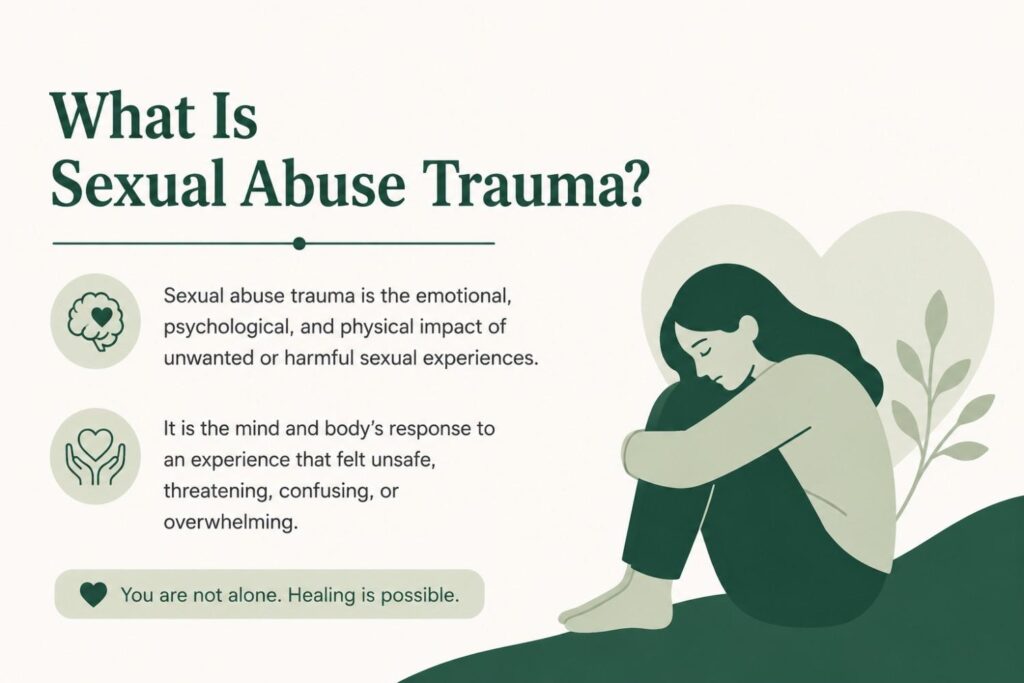
Sexual abuse trauma is the emotional, psychological, and physical impact that may happen after a person experiences unwanted sexual contact, sexual assault, harassment, coercion, grooming, or boundary violation.
Trauma is not a sign of weakness. It is the mind and body’s response to an experience that felt unsafe, threatening, confusing, or overwhelming. After sexual abuse, the brain may continue to stay alert even when the danger has passed. This can lead to fear, anxiety, nightmares, panic, emotional numbness, or difficulty trusting others.
The signs of sexual abuse trauma may affect:
- Thoughts
- Emotions
- Sleep
- Body comfort
- Relationships
- Daily routines
- Self-confidence
- School or work performance
- Personal safety feelings
Some survivors may clearly connect these changes to the abuse. Others may only feel that “something is not right” without knowing how to explain it.
Why Signs of Sexual Abuse Trauma Can Be Different
Every survivor responds differently. Two people may go through similar experiences but show completely different trauma signs. This depends on age, support system, relationship with the abuser, past experiences, personality, safety, and whether the survivor was believed after disclosure.
Some survivors may become silent and withdrawn. Others may become angry, restless, or emotionally reactive. Some may avoid touch, while others may struggle with boundaries. Some may remember the abuse clearly, while others may have gaps in memory.
The signs of sexual abuse trauma can be mild, moderate, or severe. They may come and go. They may become stronger during stress, conflict, certain smells, places, sounds, dates, or physical closeness.
Emotional Signs of Sexual Abuse Trauma
Emotional symptoms are among the most common signs of sexual abuse trauma. Survivors may feel emotions that seem confusing or difficult to control.
Common emotional signs include:
- Fear without a clear reason
- Sudden sadness
- Crying spells
- Shame or guilt
- Feeling dirty or damaged
- Anger or irritability
- Anxiety or panic
- Emotional numbness
- Mood swings
- Feeling unsafe
- Low self-worth
- Hopelessness
- Confusion about what happened
Many survivors blame themselves, even though the abuse was never their fault. This self-blame can make healing harder. Counselling helps survivors understand that responsibility belongs to the person who caused harm, not the person who experienced it.
Fear and Anxiety
A survivor may feel nervous around certain people, places, conversations, or situations. They may avoid being alone, avoid crowds, or feel uncomfortable when someone comes too close.
Shame and Guilt
Shame is one of the painful signs of sexual abuse trauma. Survivors may think, “Why did this happen to me?” or “Could I have stopped it?” These thoughts are common, but they are not accurate. Abuse is never the survivor’s fault.
Emotional Numbness
Some survivors do not cry or express pain openly. Instead, they may feel empty, disconnected, or emotionally frozen. This is also a trauma response.
Physical Signs of Sexual Abuse Trauma
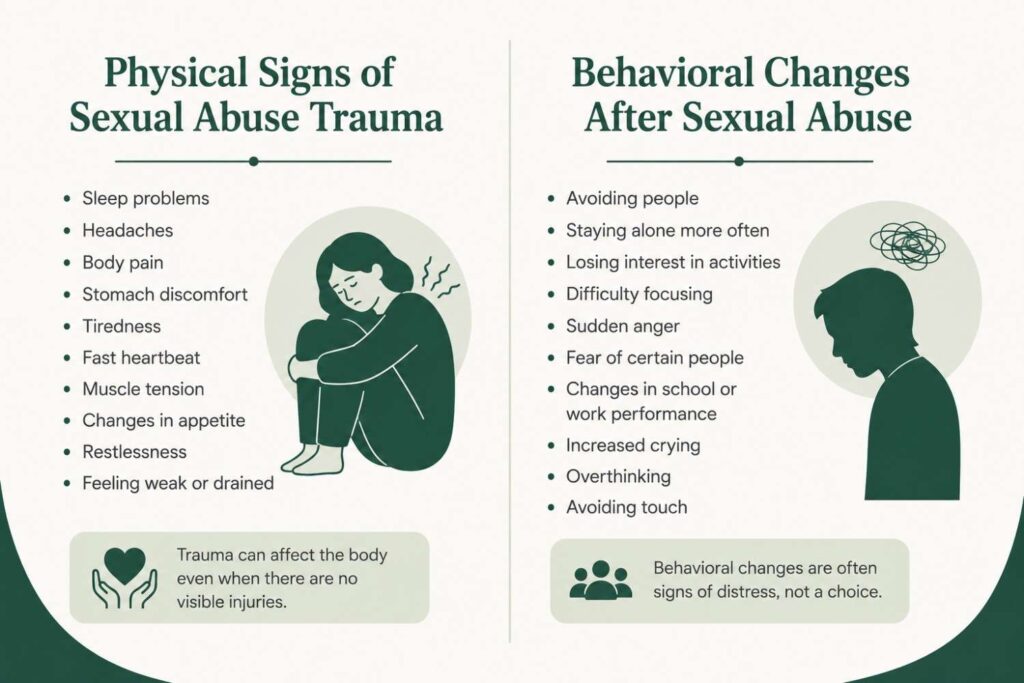
Trauma can affect the body as much as the mind. Even when there is no visible injury, the body may react to stress and fear.
Physical signs of sexual abuse trauma may include:
- Sleep problems
- Nightmares
- Headaches
- Body pain
- Stomach discomfort
- Tiredness
- Panic-like symptoms
- Fast heartbeat
- Muscle tension
- Changes in appetite
- Restlessness
- Feeling weak or drained
- Sensitivity to touch
Some survivors may feel uncomfortable in their own body. They may avoid mirrors, certain clothes, physical closeness, or medical checkups. These reactions can happen because the body remembers fear even when the person wants to move forward.
Behavioral Changes After Sexual Abuse
Behavioral changes are often noticed by family members, friends, teachers, or partners. A person may not directly say what happened, but their behavior may show distress.
Common behavioral signs of sexual abuse trauma include:
- Avoiding people
- Staying alone more often
- Losing interest in activities
- Difficulty focusing
- Sudden anger
- Avoiding specific places
- Fear of certain people
- Changes in school or work performance
- Increased crying
- Overthinking
- Repeated checking for safety
- Avoiding touch
- Becoming overly alert
- Difficulty making decisions
Some survivors may become quiet and withdrawn. Others may appear busy, active, or “normal” to avoid thinking about the pain. Both responses can happen after trauma.
Signs of Sexual Abuse Trauma in Children
Children may not always have the words to explain abuse. They may express trauma through behavior, play, fear, sleep changes, or sudden emotional reactions.
Possible signs of sexual abuse trauma in children include:
- Sudden fear of a person or place
- Nightmares
- Bedwetting after being toilet trained
- Clinginess
- Withdrawal
- Anger or tantrums
- Fear of being alone
- School refusal
- Loss of interest in play
- Age-inappropriate sexual behavior
- Sudden silence
- Crying without explanation
- Changes in eating or sleeping
- Fear of changing clothes
- Complaints of body discomfort
These signs do not automatically prove abuse, but they should be taken seriously. If a child shares anything concerning, adults should listen calmly, believe the child, and seek professional support.
Signs of Sexual Abuse Trauma in Teenagers
Teenagers may hide trauma because of shame, fear, confusion, peer pressure, or worry about family reactions. Their distress may appear as mood changes, academic issues, anger, or withdrawal.
Common signs of sexual abuse trauma in teenagers include:
- Sudden mood changes
- Anxiety or panic
- Depression symptoms
- Avoiding school or social events
- Drop in academic performance
- Self-isolation
- Irritability
- Risk-taking behavior
- Fear of certain people
- Low self-esteem
- Sleep problems
- Loss of interest in hobbies
- Body image concerns
- Difficulty trusting friends or family
- Emotional shutdown
Teenagers need a safe, non-judgmental space. Repeated questioning, blaming, or forcing them to share details can increase distress.
When to Seek Professional Help
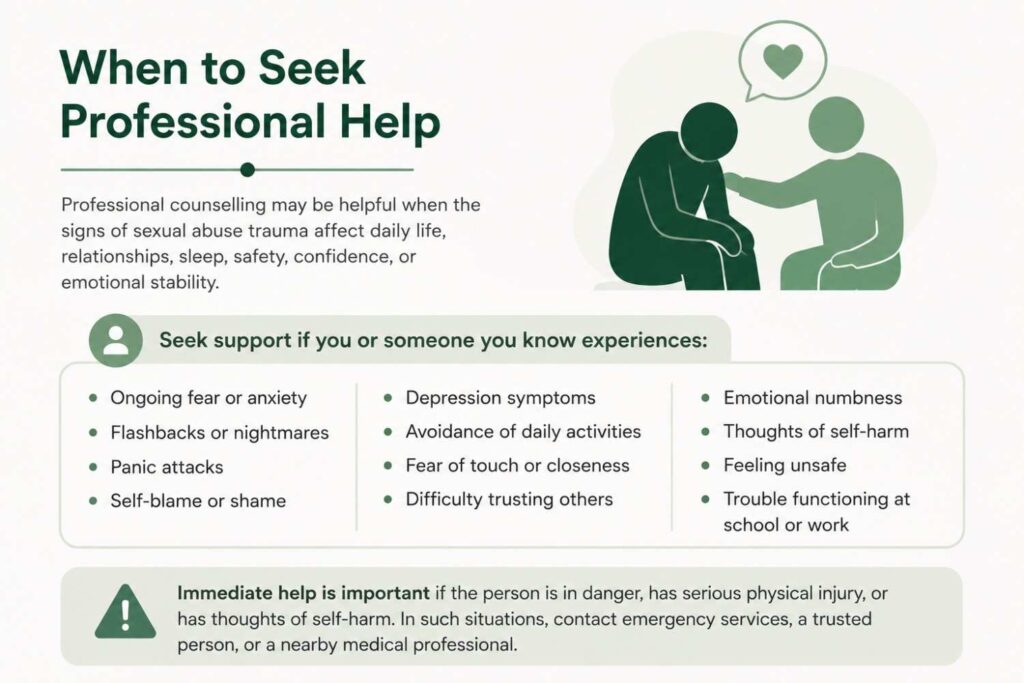
Professional counselling may be helpful when the signs of sexual abuse trauma affect daily life, relationships, sleep, safety, confidence, or emotional stability.
Seek support if you or someone you know experiences:
- Ongoing fear or anxiety
- Flashbacks or nightmares
- Panic attacks
- Self-blame or shame
- Depression symptoms
- Avoidance of daily activities
- Fear of touch or closeness
- Difficulty trusting others
- Emotional numbness
- Thoughts of self-harm
- Feeling unsafe
- Trouble functioning at school or work
Immediate help is important if the person is in danger, has serious physical injury, or has thoughts of self-harm. In such situations, contact emergency services, a trusted person, or a nearby medical professional.
How Counselling Can Help
Counselling helps survivors understand their trauma responses and rebuild a sense of safety. It does not force the survivor to share everything at once. A good therapist allows the person to move at their own pace.
Counselling may help with:
- Reducing fear and anxiety
- Managing flashbacks
- Improving sleep
- Understanding triggers
- Reducing guilt and shame
- Building emotional regulation
- Improving boundaries
- Rebuilding confidence
- Strengthening relationships
- Supporting long-term healing
A clinical psychologist may use evidence-based approaches such as trauma-informed therapy, Cognitive Behavioral Therapy, mindfulness-based techniques, grounding exercises, emotional regulation tools, and supportive counselling. These approaches can help survivors feel more stable and in control.
For survivors who need structured support, the pillar page on Sexual Abuse Counselling in Kalamassery can be used as an internal link to guide readers toward professional counselling options.
Conclusion
Recognizing the signs of sexual abuse trauma can help survivors and families take the first step toward safety, support, and healing. Trauma may appear as fear, shame, anxiety, nightmares, body discomfort, emotional numbness, relationship struggles, or sudden behavior changes.
These signs should never be ignored or judged. With compassionate support, trauma-informed counselling, and a safe environment, survivors can begin to rebuild confidence, emotional strength, and trust. Healing takes time, but no one has to face the process alone.
To better understand the importance of mental well-being and psychological care, you can explore resources from the World Health Organization’s mental health resource center.