10 Powerful Anxiety Counselling for Women Benefits & Support
Anxiety Counselling for Women is an important form of emotional support that helps women understand, manage, and overcome anxiety-related challenges. Many women experience anxiety due to personal responsibilities, work pressures, family concerns, relationship issues, health worries, or major life transitions. Seeking professional guidance can help individuals develop healthier coping mechanisms and improve overall well-being.
For women seeking support in Thrissur, understanding the benefits of Anxiety Counselling for Women can be the first step toward emotional balance and improved quality of life.
Understanding Anxiety Counselling for Women
Anxiety Counselling for Women focuses on addressing emotional, psychological, and behavioral challenges related to anxiety. It provides a safe and supportive environment where women can discuss their concerns openly without judgment.
The goal of counselling is not only to reduce anxiety symptoms but also to help women gain confidence, develop resilience, and improve emotional well-being.
Professional counselling may help women:
- Identify anxiety triggers
- Understand thought patterns
- Develop coping skills
- Improve emotional regulation
- Strengthen self-esteem
- Build healthy relationships
- Enhance stress management abilities
Why Anxiety Affects Women Differently
Women may experience anxiety differently due to a combination of biological, social, emotional, and environmental factors.
Hormonal Influences
Hormonal fluctuations during various life stages can affect emotional health. These stages may include:
- Adolescence
- Pregnancy
- Postpartum period
- Perimenopause
- Menopause
Social Expectations
Women often balance multiple responsibilities simultaneously, including:
- Career demands
- Family responsibilities
- Caregiving duties
- Household management
- Social commitments
Managing these responsibilities can sometimes contribute to increased stress and anxiety.
Emotional Factors
Women may be more likely to internalize emotional struggles, leading to excessive worry, self-criticism, or fear of failure.
Common Causes Addressed Through Anxiety Counselling for Women
Anxiety Counselling for Women can help address a wide range of concerns.
Work-Related Stress
Professional pressures may include:
- Tight deadlines
- Workplace conflicts
- Career uncertainty
- Performance expectations
Relationship Challenges
Emotional difficulties can arise from:
- Marital issues
- Family conflicts
- Friendship concerns
- Communication difficulties
Health Concerns
Worries about personal health or the health of loved ones may contribute to ongoing anxiety.
Financial Pressures
Managing expenses, debts, and future financial planning can create emotional strain.
Life Transitions
Major changes may trigger anxiety, including:
- Marriage
- Divorce
- Motherhood
- Career changes
- Relocation
- Retirement
Signs That Anxiety Counselling for Women May Be Helpful
Many women experience occasional stress, but persistent symptoms may indicate the need for professional support.
Common signs include:
- Excessive worrying
- Constant nervousness
- Restlessness
- Difficulty concentrating
- Irritability
- Fatigue
- Sleep disturbances
- Racing thoughts
- Muscle tension
- Avoidance behaviors
Emotional Symptoms
Women may experience:
- Fearfulness
- Feelings of overwhelm
- Persistent uneasiness
- Increased sensitivity
- Low confidence
Physical Symptoms
Anxiety can sometimes manifest physically through:
- Headaches
- Digestive discomfort
- Rapid heartbeat
- Sweating
- Dizziness
- Shortness of breath
Types of Anxiety Concerns Discussed in Counselling
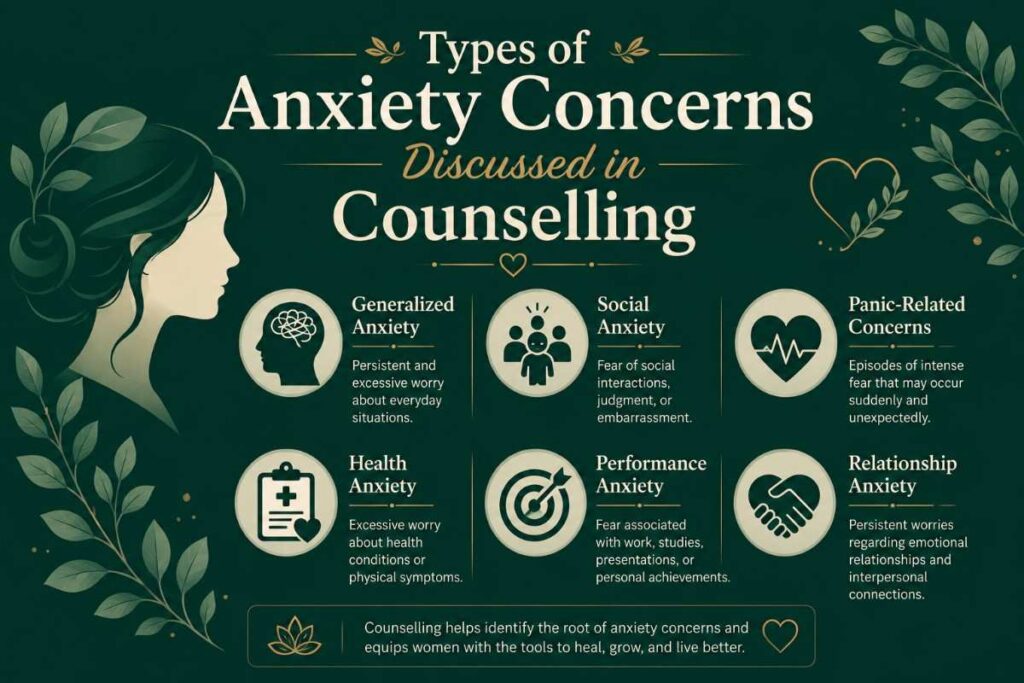
Generalized Anxiety
Persistent and excessive worry about everyday situations.
Social Anxiety
Fear of social interactions, judgment, or embarrassment.
Panic-Related Concerns
Episodes of intense fear that may occur suddenly and unexpectedly.
Health Anxiety
Excessive worry about health conditions or physical symptoms.
Performance Anxiety
Fear associated with work, studies, presentations, or personal achievements.
Relationship Anxiety
Persistent worries regarding emotional relationships and interpersonal connections
How Anxiety Counselling for Women Works
Anxiety Counselling for Women typically begins with an assessment process to understand individual concerns, symptoms, and goals.
Initial Discussion
The counsellor may explore:
- Current challenges
- Emotional experiences
- Personal history
- Lifestyle factors
- Coping mechanisms
Goal Setting
Clear and realistic goals are established based on the individual’s needs.
Examples may include:
- Reducing anxiety symptoms
- Improving confidence
- Enhancing communication skills
- Managing stress more effectively
Ongoing Support
Regular counselling sessions help individuals practice new coping strategies and monitor progress over time.
Techniques Commonly Used in Anxiety Counselling for Women
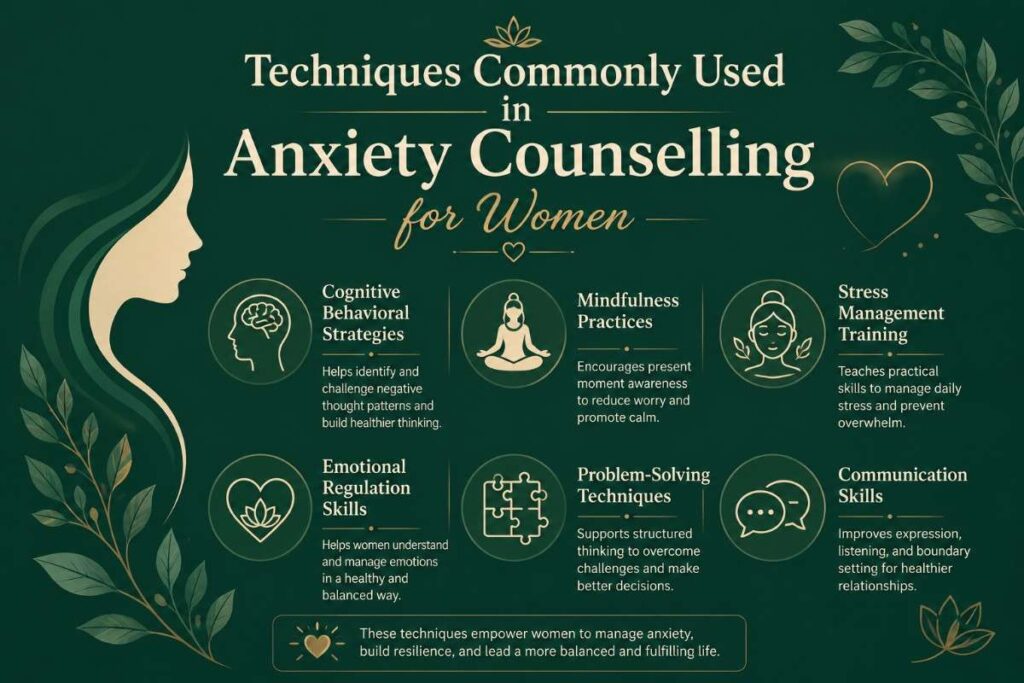
Various counselling approaches may be used depending on individual needs.
Cognitive Behavioral Strategies
These techniques help identify and challenge unhelpful thought patterns.
Benefits may include:
- Improved thinking habits
- Reduced worry
- Better emotional control
Mindfulness Practices
Mindfulness encourages awareness of the present moment rather than focusing on future fears.
Common practices include:
- Deep breathing
- Meditation
- Relaxation exercises
- Guided awareness techniques
Stress Management Training
Women learn practical methods to manage daily stressors more effectively.
Emotional Regulation Skills
These skills help individuals respond calmly to emotional situations.
Problem-Solving Techniques
Structured approaches can improve decision-making and reduce feelings of overwhelm.
Benefits of Anxiety Counselling for Women
Improved Emotional Well-Being
Counselling can help women understand and manage emotions more effectively.
Greater Self-Confidence
Many women develop stronger self-esteem through counselling.
Better Stress Management
Learning healthy coping techniques can reduce the impact of everyday stress.
Improved Relationships
Enhanced communication and emotional awareness often support healthier relationships.
Better Sleep
Reducing anxiety may contribute to improved sleep quality.
Enhanced Decision-Making
Women may feel more confident when making important personal and professional decisions.
Increased Resilience
Counselling can help individuals adapt more effectively to life’s challenges.
Healthier Thought Patterns
Negative thinking habits can gradually be replaced with more balanced perspectives.
Self-Care Tips That Complement Anxiety Counselling for Women
While professional counselling is valuable, self-care practices may also support emotional health.
Maintain Regular Physical Activity
Exercise can help reduce stress and improve mood.
Prioritize Sleep
Good sleep habits contribute significantly to emotional well-being.
Practice Relaxation Techniques
Helpful techniques include:
- Deep breathing
- Meditation
- Progressive muscle relaxation
- Gentle stretching
Build a Support System
Trusted friends, family members, or support groups can provide emotional encouragement.
Limit Stress Triggers
Where possible, identify and reduce unnecessary sources of stress.
Maintain Healthy Boundaries
Setting boundaries can protect emotional energy and reduce overwhelm.
When to Seek Anxiety Counselling for Women
Professional support may be beneficial when anxiety:
- Interferes with daily life
- Affects relationships
- Impacts work performance
- Causes ongoing emotional distress
- Leads to avoidance behaviors
- Persists despite self-help efforts
Seeking help early may prevent symptoms from becoming more challenging over time.
Long-Term Outlook
Many women experience meaningful improvements through Anxiety Counselling for Women. Progress often occurs gradually through consistent effort, self-awareness, and professional guidance.
The counselling process can help women develop lifelong skills that support emotional resilience, confidence, and healthier responses to stress.
Conclusion
Anxiety Counselling for Women provides valuable support for managing worries, stress, and emotional challenges. Through professional guidance, women can better understand their anxiety, develop effective coping strategies, and improve overall well-being. Whether anxiety is related to relationships, work, health concerns, or life transitions, Anxiety Counselling for Women offers a structured and supportive path toward emotional balance, confidence, and long-term resilience. Women exploring counselling options in Thrissur may benefit from seeking timely support to improve their quality of life and emotional health. For additional information about anxiety and mental health, you can refer to the resources provided by the World Health Organization (WHO) , which offers evidence-based information on anxiety, emotional well-being, and mental health support.
Frequently Asked Questions
What is Anxiety Counselling for Women
It is a counselling approach designed to help women manage anxiety, stress, worries, and emotional challenges.
Who can benefit from Anxiety Counselling for Women
Women experiencing persistent anxiety, stress, emotional overwhelm, or life challenges may benefit.
Is counselling only for severe anxiety
No. Counselling can help with mild, moderate, or severe anxiety concerns.
How many sessions are usually needed
The number of sessions varies depending on individual needs and goals.
Can counselling help with work-related anxiety
Yes, counselling may provide strategies to manage workplace stress and performance concerns.
Does counselling include relaxation techniques
Many counselling approaches incorporate relaxation and stress-management techniques.
Can Anxiety Counselling for Women improve self-confidence
Yes, many women develop stronger self-esteem and confidence through counselling.
Is counselling confidential
Professional counselling services generally maintain confidentiality within applicable guidelines.
Can counselling help with relationship anxiety
Yes, counselling often addresses relationship-related worries and communication challenges.
What should I expect during the first session
The first session typically involves discussing concerns, goals, and personal experiences.