Managing Stress and Building Emotional Resilience

Women often juggle multiple responsibilities, including career demands, family commitments, relationships, parenting, and personal expectations. Over time, these pressures can contribute to emotional exhaustion, anxiety, overwhelm, and burnout. Stress Management Therapy for Women provides professional support to help individuals understand stress triggers, develop healthy coping strategies, and improve overall emotional well-being.
Seeking support is not a sign of weakness. Instead, it is a proactive step toward protecting mental health and creating a healthier balance between personal, family, and professional life. Through evidence-based therapeutic approaches, Stress Management Therapy for Women helps individuals build resilience, improve emotional regulation, and regain a sense of control.
What is Stress Management Therapy for Women?
Stress Management Therapy for Women is a structured psychological approach that helps women identify sources of stress and learn practical techniques to manage emotional, mental, and physical responses to challenging situations.
The goal is not to eliminate stress entirely but to develop healthier ways of coping with it.
Therapy may help women:
- Understand stress triggers
- Improve emotional awareness
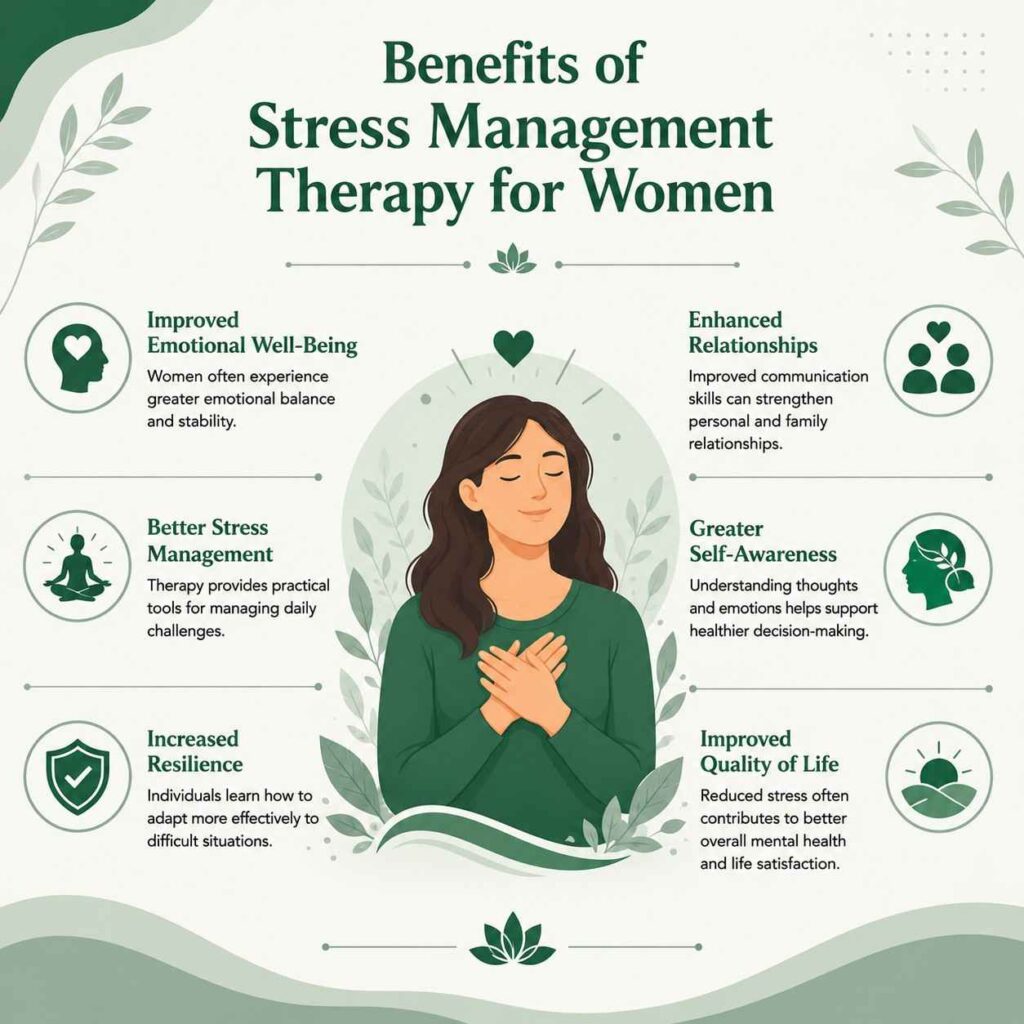
- Build resilience
- Strengthen coping skills
- Improve work-life balance
- Reduce anxiety and overwhelm
- Enhance overall well-being
Why Women Experience Stress Differently
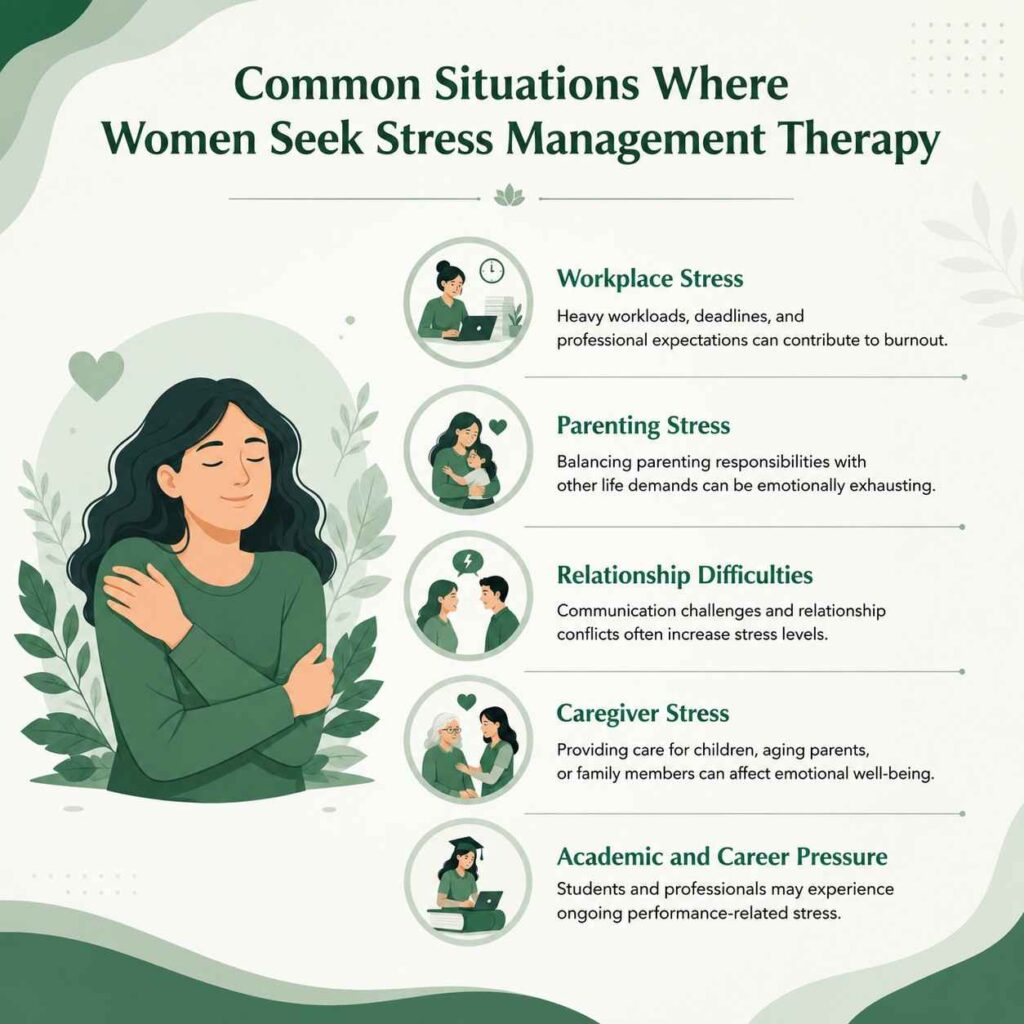
Women often face unique challenges that can contribute to chronic stress.
Common factors include:
Work and Career Pressures
Balancing professional responsibilities with personal commitments can create ongoing stress.
Family Responsibilities
Managing household responsibilities, caregiving, and parenting can become emotionally demanding.
Relationship Challenges
Personal relationships may contribute to emotional strain and stress.
Life Transitions
Marriage, motherhood, career changes, relocation, and other life events often require emotional adjustment.
Personal Expectations
Many women place significant pressure on themselves to meet high standards in multiple areas of life.
These factors make Stress Management Therapy for Women particularly valuable in supporting emotional well-being.
Common Signs That Stress Is Affecting Your Mental Health
Stress can affect both emotional and physical health.
Common symptoms include:
Emotional Symptoms
- Irritability
- Feeling overwhelmed
- Mood changes
- Anxiety
- Emotional exhaustion
Physical Symptoms
- Headaches
- Fatigue
- Muscle tension
- Sleep disturbances
- Reduced energy levels
Cognitive Symptoms
- Difficulty concentrating
- Racing thoughts
- Forgetfulness
- Constant worrying
Recognizing these signs early can help prevent long-term emotional difficulties.
How Stress Management Therapy for Women Helps
Professional counselling provides a supportive and confidential environment where women can explore their concerns and develop healthier coping mechanisms. Women experiencing ongoing stress, anxiety, relationship concerns, or emotional challenges may also benefit from consulting Lady Psychologist in Kalamassery for personalized psychological support.
Therapy may help individuals:
Identify Stress Triggers
Understanding the root causes of stress is often the first step toward effective management.
Improve Emotional Regulation
Therapy helps women manage difficult emotions more effectively.
Develop Healthy Coping Strategies
Clients learn practical techniques for handling everyday stressors.
Strengthen Self-Confidence
Improved self-awareness often leads to increased confidence and self-esteem.
Create Healthy Boundaries
Learning to set boundaries can reduce emotional overload and improve work-life balance.
Therapy Approaches Used for Stress Management
Different therapeutic approaches may be used depending on individual needs.
Cognitive Behavioral Therapy (CBT)
CBT helps identify and modify unhelpful thought patterns that contribute to stress.
Benefits include:
- Better emotional regulation
- Improved coping skills
- Reduced anxiety
- Enhanced problem-solving
Mindfulness-Based Techniques
Mindfulness helps individuals focus on the present moment rather than becoming overwhelmed by future concerns.
Benefits include:
- Reduced stress
- Greater emotional awareness
- Improved focus
- Better emotional balance
Supportive Counselling
Supportive counselling provides a safe space to discuss challenges while receiving professional guidance and encouragement.
These evidence-based approaches are commonly used in Stress Management Therapy for Women.
Practical Stress Management Techniques Learned in Therapy
Women attending therapy often learn skills that can be applied in daily life.
Common techniques include:
Relaxation Exercises
Breathing exercises and relaxation methods help calm the body’s stress response.
Time Management Strategies
Improved planning and prioritization can reduce feelings of overwhelm.
Boundary Setting
Learning to say no when necessary helps protect emotional well-being.
Emotional Awareness
Understanding emotions helps individuals respond more effectively to stressful situations.
Self-Care Practices
Developing healthy self-care routines supports long-term emotional health.
The Connection Between Stress and Anxiety
Long-term stress can sometimes contribute to anxiety symptoms.
Women experiencing chronic stress may notice:
- Constant worrying
- Difficulty relaxing
- Sleep problems
- Restlessness
- Increased emotional sensitivity
Stress Management Therapy for Women can help address both stress and anxiety by developing healthier thought patterns and coping mechanisms.
What to Expect During Your First Therapy Session
Many women feel uncertain before attending their first session.
During the initial consultation, the psychologist may discuss:
- Current concerns
- Sources of stress
- Personal history
- Emotional challenges
- Therapy goals
- Expectations for treatment
The first session focuses on understanding your needs and developing a personalized therapeutic plan.
When Should You Seek Professional Help?
It may be helpful to consider Stress Management Therapy for Women if you experience:
- Frequent stress
- Emotional exhaustion
- Anxiety
- Difficulty coping with daily responsibilities
- Work-life imbalance
- Sleep difficulties
- Relationship stress
- Persistent feelings of overwhelm
Early support can help prevent stress from affecting long-term emotional well-being.
Conclusion
Stress Management Therapy for Women provides practical tools and professional guidance to help women navigate life’s challenges with greater confidence and emotional balance. By identifying stress triggers, improving coping skills, and developing healthier thought patterns, therapy can support both immediate relief and long-term well-being.
Whether you are dealing with workplace stress, parenting responsibilities, relationship concerns, or feelings of overwhelm, seeking professional support can be a valuable step toward improved mental health. With the right strategies and guidance, women can build resilience, strengthen emotional well-being, and create a healthier, more balanced life.
For additional information about stress management and mental well-being, visit: World Health Organization Mental Health Resources.
Frequently Asked Questions
What is Stress Management Therapy for Women?
It is a therapeutic approach that helps women understand stress triggers, develop coping strategies, and improve emotional well-being.
Can therapy help with work-related stress?
Yes. Therapy can help individuals manage workplace pressure, improve boundaries, and reduce burnout.
Is stress management therapy only for severe stress?
No. Therapy can be beneficial for both everyday stress and more significant emotional challenges.
Can stress affect physical health?
Yes. Chronic stress may contribute to headaches, fatigue, muscle tension, and sleep difficulties.
How does CBT help with stress management?
CBT helps identify and modify unhelpful thought patterns that contribute to stress and anxiety.
Can therapy improve work-life balance?
Yes. Therapy often helps individuals develop healthier boundaries and time management strategies.
How many therapy sessions are usually needed?
The number of sessions varies depending on individual goals and concerns.
Is stress management therapy confidential?
Yes. Therapy sessions are conducted in a safe and confidential environment.
Can stress management therapy help with anxiety?
Yes. Many stress management techniques are also effective for reducing anxiety symptoms.
When should I seek professional support for stress?
If stress is affecting your emotional well-being, relationships, work performance, or daily functioning, professional support may be beneficial.